Beijing Summit Calls for a Greener Future Under the Belt and Road Initiative
Posted 2 months ago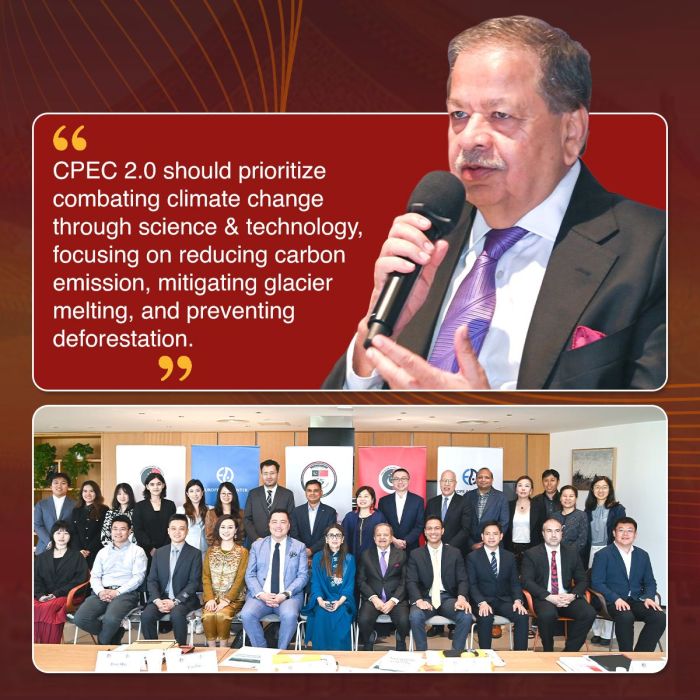
30/2026
Climate resilience, green industrialization, and sustainable economic cooperation emerged as defining themes of a recent high-level regional summit on "Energy Transition and Green Development under the Belt and Road Initiative (BRI)." Experts from across Asia and Europe called for a new era of environmentally responsible development under the China-Pakistan Economic Corridor (CPEC).
The conference convened diplomats, policymakers, academics, climate finance specialists, legal experts, private-sector representatives, and leaders of green development institutions to explore how CPEC 2.0 can accelerate climate action and strengthen industrial collaboration, clean technology supply chains, and sustainable economic growth.
Among the keynote presentations, a prominent address emphasized that the next phase of Pakistan-China cooperation should center development planning on climate change. The presentation argued that scientific innovation and technological collaboration are essential for reducing carbon emissions, protecting mountain ecosystems, slowing glacier loss, and reversing deforestation across the region.
The address underscored the strategic importance of the Karakoram glacial system, noting that glaciers shared by Pakistan and China, including Khunjerab, Siachen, Batura, and Baltoro, feed the Indus River, which is the lifeline for more than 220 million people and the source of irrigation for the vast majority of Pakistan's agricultural land. With glacier melt already contributing a substantial share of the river's flow and freshwater availability continuing to decline, participants were reminded that climate change poses immediate risks to food security, water resources, and regional stability.
A key proposal at the summit called for transforming CPEC 2.0 into a climate-resilient ecological partnership through deeper scientific cooperation. Recommendations included joint deployment of advanced technologies for glacier monitoring, river-temperature assessment, water-quality surveillance, biodiversity conservation, watershed restoration, and satellite-based deforestation monitoring. Such practical collaboration, participants noted, would yield measurable environmental benefits while reinforcing long-term strategic cooperation between Pakistan and China.
The conference also featured a panel discussion marking 75 years of Pakistan-China diplomatic relations, during which participants reflected on future opportunities in sustainable development, investment, technology transfer, green finance, and regional connectivity under the Belt and Road Initiative.
Following the conference, Prof. Dr. Muhammad Mukhtar, Rector of the University of Southern Punjab, Multan, Pakistan, and Senior Managing Director of Greeningdotlive, expressed appreciation. He described the summit as an inspiring and intellectually rewarding experience that showcased the growing commitment of regional stakeholders to sustainable development. He noted that meaningful collaboration in climate science, watershed restoration, biodiversity conservation, and environmental monitoring could position Pakistan as a leading example of green development under the Belt and Road Initiative and further strengthen the enduring partnership between Pakistan and China.