The Vanishing Caspian: Why the World’s Largest Lake Is Disappearing Before Our Eyes
Posted 3 months ago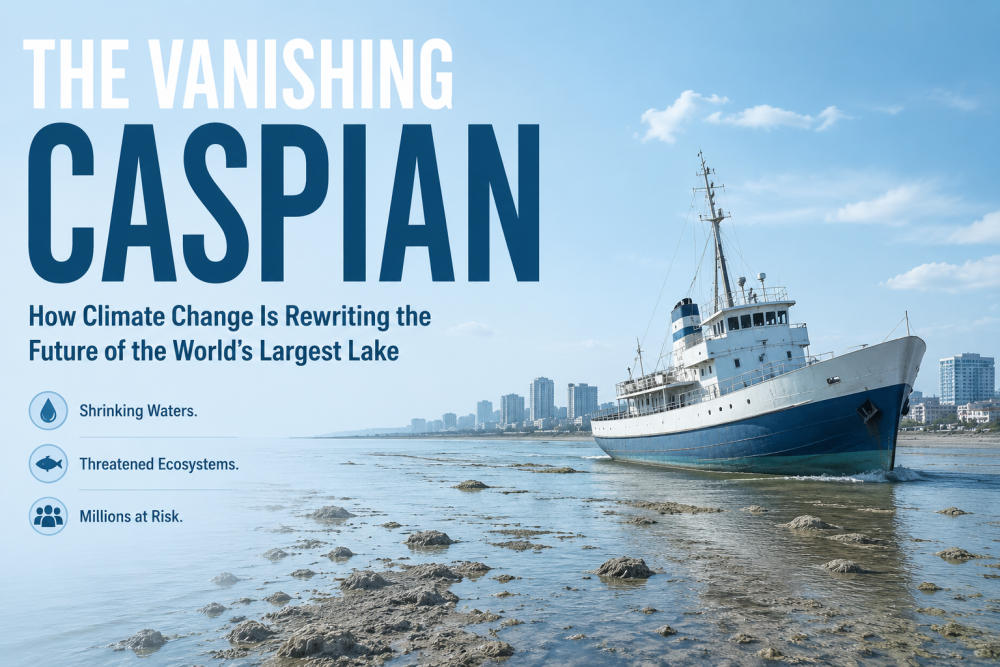
27/2026
For centuries, the vast waters of the Caspian Sea have shaped civilizations, sustained thriving fisheries, fueled economies, and nurtured unique wildlife. It borders five nations, including Kazakhstan, Russia, Azerbaijan, Turkmenistan, and Iran. Although often called the sea, it is technically the world's largest lake.
Now, scientists and environmental experts warn that this giant body of water is shrinking at an alarming rate. What may sound like a distant geographical problem is rapidly becoming one of the most significant environmental stories of our time.
A Giant Lake in Retreat
The Caspian Sea covers an area larger than many countries and contains roughly 40 percent of the world's inland lake water. It has no natural outlet to the ocean, relying primarily on rivers, especially the Volga River, and a delicate balance between inflow and evaporation.
That balance is breaking down.
Rising global temperatures are increasing evaporation, while changing weather patterns and reduced river inflows are decreasing the amount of water entering the lake. Researchers have warned that the Caspian could lose several meters of water depth during this century if current trends continue.
The change may appear gradually on maps, but along the shoreline, it is impossible to ignore. Water is receding, coastlines are shifting, and once-busy harbors are moving farther from the water's edge.
Climate Change Leaves Its Fingerprints
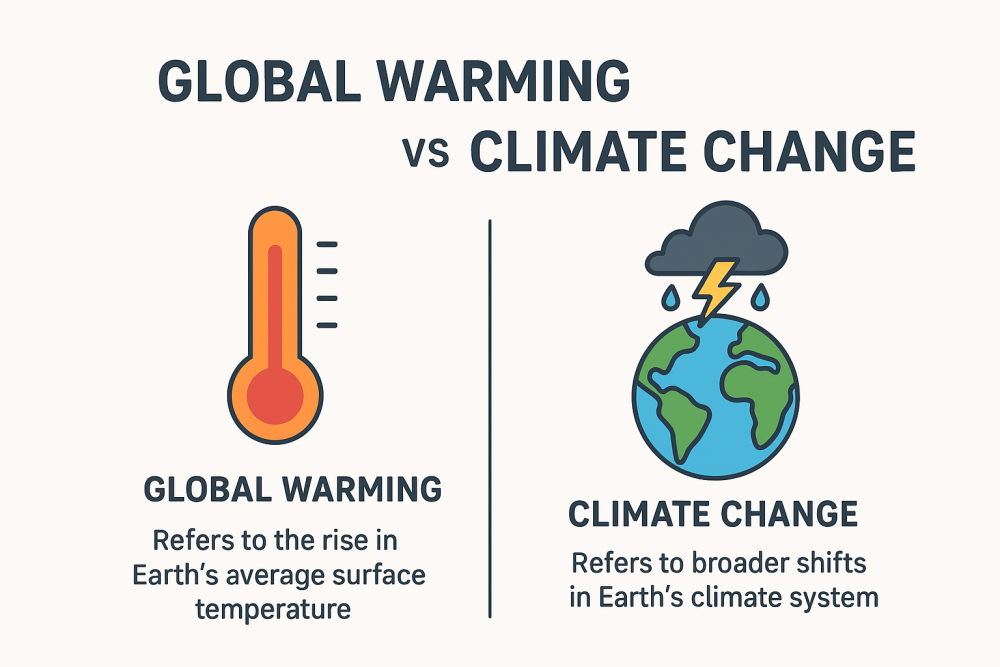
Climate change is often discussed in terms of melting glaciers, rising oceans, and extreme weather. Yet the shrinking of inland water bodies may be among its most visible and immediate impacts.
Warmer temperatures mean more water evaporates from the Caspian's surface. Because the lake is essentially a closed basin, evaporated water is not easily replaced. At the same time, rivers feeding the lake are increasingly affected by dams, irrigation projects, and shifting rainfall patterns.
The result is a slow but relentless decline in water levels.
An Ecological Treasure Under Threat
The Caspian Sea is not merely a body of water; it is a world of biodiversity.
It hosts hundreds of unique species found nowhere else on Earth. Among its most famous inhabitants are the Caspian seal, one of the few seal species that live entirely in inland waters, and several sturgeon species, whose eggs produce the world's prized caviar.
As water levels fall, shallow coastal habitats disappear. Wetlands shrink, breeding grounds are lost, and migration routes shift. Species that evolved over millions of years suddenly struggle to survive in rapidly changing conditions.
Environmental experts warn that continued declines could eliminate large portions of critical habitat for sturgeons and other aquatic species. The consequences could ripple through the entire food web.
When Nature Changes, Economies Follow
The environmental story is only part of the crisis.
Millions of people depend on the Caspian Sea for their livelihoods. Fishing communities, shipping industries, tourism operators, and energy companies rely on stable water levels.
As shorelines retreat, ports require costly dredging to remain operational. Fishing grounds shift or disappear. Infrastructure built near the water suddenly finds itself stranded farther inland.
Communities that have depended on the lake for generations are facing an uncertain future.
History offers a cautionary tale. The Aral Sea's tragic decline, once one of the world's largest inland water bodies, devastated ecosystems and local economies across Central Asia. What was once a thriving fishing region has become a symbol of environmental collapse. Experts fear that, without decisive action, parts of the Caspian region could face similar challenges.
Why the Whole World Should Care
The shrinking Caspian Sea is not just a regional issue.
It is a powerful reminder that climate change can reshape landscapes in unexpected ways. While rising seas threaten some regions, disappearing lakes threaten others. Both are symptoms of the same planetary imbalance.
The Caspian also serves as a living laboratory for studying how ecosystems respond to rapid environmental change. What happens here could help scientists predict future impacts on lakes, wetlands, and coastal systems worldwide.
Can the Decline Be Slowed?
There is no simple solution.
Protecting river inflows, improving water management, reducing greenhouse gas emissions, and strengthening international cooperation among the five bordering nations will all be necessary. Scientists emphasize that monitoring programs and coordinated environmental policies are critical to preserving the region's ecological and economic future. (Reuters)
The challenge is immense, but the cost of inaction may be even greater.
A Warning Written in Water
The Caspian Sea has endured ice ages, continental shifts, and the rise and fall of empires. Yet today it faces a new threat, one driven largely by human activity.
As its waters retreat, they reveal more than an exposed shoreline. They expose the vulnerability of ecosystems, economies, and communities in a warming world.
The disappearance of the world's largest lake would be more than a geographic change. It would be a profound environmental loss, a warning etched across an entire region, and a reminder that even the largest natural wonders are not immune to the consequences of a changing climate.