Waste Management -Basic Understanding - Lecture 12
Posted 7 months ago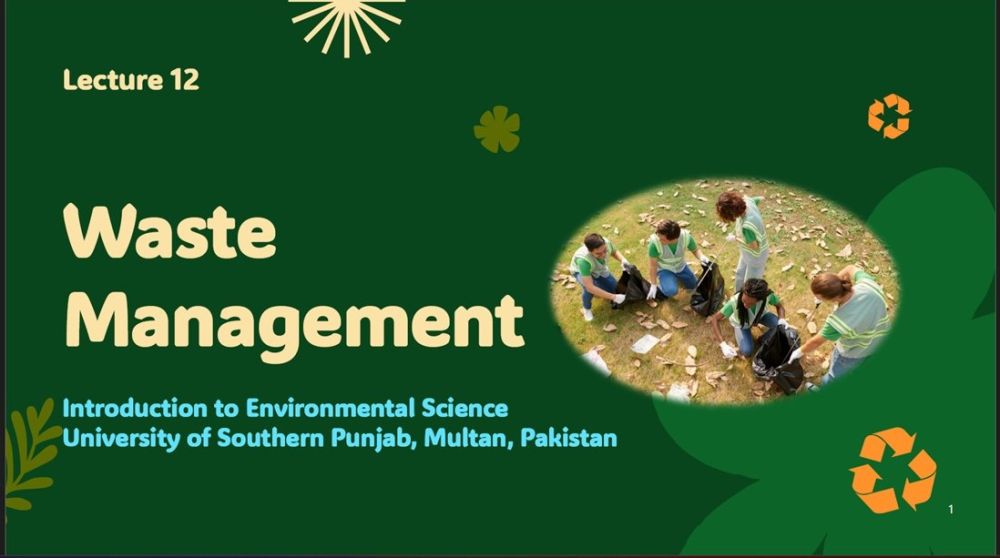
6/2026
The production of waste is an inherent consequence of human activities, reflecting patterns of economic growth, technological advancement, and lifestyle choices. As populations rise, cities grow, and consumption increases, both the amount and complexity of waste also expand. Consequently, waste management has become one of the most urgent environmental issues of today, especially in developing countries like Pakistan. In environmental science, waste is broadly defined as any substance or material that no longer has a useful purpose and needs treatment or safe disposal. However, this definition varies across countries because of differences in government policies, technological capabilities, economic value, and societal priorities. Understanding these variations helps students appreciate the global diversity in waste management approaches.
The importance of waste management is closely tied to environmental protection, public health, and sustainable development. Improper waste disposal causes soil contamination, water pollution, poor air quality, and the spread of diseases. Accumulated waste creates breeding grounds for insects and rodents, increasing the risk of illnesses such as dengue, cholera, and typhoid. Effective waste management systems help reduce these dangers while conserving natural resources and promoting cleaner, healthier urban environments. Sustainable waste management practices also reduce pressure on landfills and help preserve raw materials, making it a crucial part of environmental responsibility and good governance.
Waste can be categorized by physical state, origin, and hazard potential, with each category requiring a specific management approach. Liquid waste includes wastewater and effluents that can pollute rivers, lakes, and groundwater if not managed properly. It encompasses point-source waste, such as industrial effluents and manufactured liquids like detergents, as well as nonpoint-source waste, such as rainwater runoff that carries pollutants from roads and farmland. Solid waste, the most visible and common type of waste in urban areas, includes plastics, paper, metals, glass, and ceramics. When not collected and disposed of correctly, solid waste can block drainage systems, cause flooding, and reduce the visual and environmental quality of cities.
Hazardous waste is a more serious category because of its toxic, flammable, corrosive, or reactive properties. Examples include pesticides, industrial chemicals, and pressurized containers like fire extinguishers. Improper handling or disposal of hazardous waste can lead to serious health issues, environmental contamination, and long-term ecological harm. Organic waste, on the other hand, comes from plants and animals and includes food scraps, animal manure, and agricultural residues. Since organic waste is biodegradable, it can be safely recycled through composting or biogas production, returning essential nutrients to the soil and supporting sustainable farming. Recyclable waste, whether organic or inorganic, includes materials such as paper, plastics, and metals, as well as certain organic wastes that can be transformed into new products. Recycling decreases energy use, conserves raw materials, and reduces pollution, making it a key part of sustainable waste management.
Effective waste management requires careful planning and systematic implementation. A comprehensive waste management plan includes early identification of waste types, proper planning and coordination, trained personnel, adequate resources, and clear communication systems. Special control measures are essential for hazardous waste, and regular training and mock drills help ensure preparedness and safety. Routine waste management activities, such as cleaning, maintenance, and groundskeeping, form the operational backbone of the system and ensure that waste is handled efficiently daily.
Several methods are used for waste disposal and treatment, depending on the type of waste and environmental considerations. Landfilling involves burying waste in designated sites, which must be carefully designed to prevent leakage and protect soil and groundwater; otherwise, landfills can become major pollution sources. Recycling transforms used materials like plastics, paper, and metals into new products, reducing the need for raw material extraction and saving energy. Incineration burns waste, especially organic waste, to reduce volume and destroy harmful substances, but it requires strict environmental controls to limit air pollution. Waste-to-energy technologies convert non-recyclable waste into electricity or heat, helping decrease landfill use while generating energy. Understanding these methods helps students evaluate their environmental benefits and limitations.
Additionally, resource recovery treats waste as a valuable input rather than a burden. In contrast, waste minimization focuses on reducing waste at the source through better planning, efficient resource use, and sustainable consumption. The guiding principle of modern waste management is that the best waste is the waste that is never produced.
A widely accepted framework for sustainable waste management is the waste management hierarchy. This hierarchy prioritizes prevention first, then reduction, reuse, recycling, recovery, and finally disposal as the least preferred option. Following this hierarchy, societies can decrease environmental harm, conserve resources, and promote sustainable development.
Waste management activities expose workers to various physical, chemical, and biological hazards, underscoring the need for safety. The use of personal protective equipment, or PPE, is essential during waste collection, handling, treatment, and disposal. PPE includes gloves to protect hands from cuts and contamination, masks and respirators to prevent inhalation of dust and harmful fumes, protective clothing to prevent contact with hazardous substances, safety boots to guard against sharp objects and spills, and eye protection against splashes and particles. Proper training on PPE use and safety protocols reduces occupational health risks, prevents injuries and infections, and ensures compliance with safety regulations, thereby protecting both workers and surrounding communities.
From a global perspective, waste management is becoming an increasingly serious challenge. Municipal solid waste production is expected to grow significantly in the coming decades, and the related economic, health, and environmental costs will rise if urgent measures are not implemented. Poor waste management practices contribute to pollution, climate change, and public health problems, especially in low- and middle-income countries. Addressing these issues requires coordinated policies, technological advancements, public awareness, and international cooperation.
Question 1: Define waste and explain why its definition varies from country to country.
Waste refers to any substance, material, or product that is discarded because it is no longer considered useful for its original purpose. However, the definition of waste is not fixed or universal. It varies across countries because governments define waste through laws, environmental regulations, economic priorities, and technological factors. In developed countries, materials such as plastics, electronic devices, and organic waste may be seen as recyclable thanks to advanced recycling systems. Conversely, in developing countries, the same materials could be considered waste due to limited facilities, weak enforcement, or the absence of markets for recycled products. Cultural practices and consumption habits also influence a society’s view of waste. Therefore, waste is not just a physical concept but also a legal, economic, and social one.
Question 2: Why is waste management considered a critical environmental issue?
Waste management is a crucial environmental concern because improper handling and disposal of waste directly endanger ecosystems, human health, and sustainable growth. Uncollected or poorly managed waste pollutes soil and water, releases toxic gases into the air, and adds to climate change through methane emissions from landfills. In cities, unmanaged waste clogs drainage systems, leading to flooding and the spread of waterborne diseases. Additionally, waste mismanagement increases pressure on healthcare systems and reduces the quality of life. As populations grow and consumption rises, waste production accelerates, making effective waste management vital for protecting the environment and public health and for maintaining long-term sustainability.
Question 3: Differentiate between solid waste and hazardous waste, providing examples.
Solid waste includes everyday discarded materials that are generally non-toxic but can cause environmental problems if not properly managed. Examples are plastic bags, paper, cardboard, glass bottles, and metal cans. These materials mainly cause visual pollution, clog drainage systems, and take up space in landfills. Hazardous waste, on the other hand, presents serious risks due to its toxic, flammable, corrosive, or reactive properties. Examples include pesticides, industrial chemicals, medical waste, and pressurized containers like fire extinguishers. Unlike regular solid waste, hazardous waste can cause poisoning, chemical burns, long-term health issues, and severe environmental damage even in small amounts. This is why it requires specialized handling and disposal.
Question 4: Explain the importance of organic waste in sustainable waste management.
Organic waste is vital for sustainable waste management because it decomposes naturally and can be safely returned to ecosystems. Organic waste, such as food scraps, agricultural residues, and animal manure, can be composted, improving soil fertility and reducing reliance on chemical fertilizers. It can also be used in biogas production, providing a renewable energy source for cooking and electricity. Properly managing organic waste reduces the amount sent to landfills, lowers greenhouse gas emissions, and supports circular economy practices. In agricultural countries like Pakistan, effective organic waste management can significantly boost soil health and food security.
Question 5: What is a waste management plan, and why is it important?
A waste management plan is a structured framework that explains how waste will be identified, collected, handled, treated, and disposed of safely and responsibly. It is vital because waste management involves many stages and risks, especially when dangerous materials are involved. A well-designed plan guarantees compliance with environmental laws, protects workers and the public, and prevents accidental pollution. It also improves operational efficiency by defining responsibilities, assigning resources, and setting clear procedures. Regular training, monitoring, and updates help institutions and municipalities respond effectively to changing waste patterns and new risks.
Question 6: Describe landfilling as a waste disposal method and discuss its limitations.
Landfilling is a common waste-disposal method in which waste is buried in designated sites designed to keep it separated from the environment. Modern sanitary landfills have protective liners and drainage systems to prevent leaks and groundwater pollution. Despite these protections, landfilling has notable drawbacks. Poorly managed landfills can release toxic leachate into soil and water and produce methane, a powerful greenhouse gas. Landfills also need large areas of land, which is a concern in densely populated areas. Additionally, landfilling doesn't recover the value of materials and is therefore considered the least sustainable waste management option.
Question 7: How does recycling support sustainability?
Recycling supports sustainability by reducing the extraction of natural resources, reducing energy use, and reducing environmental pollution. When materials such as paper, plastics, and metals are recycled, fewer raw materials need to be mined or harvested, which preserves forests, minerals, and ecosystems. Recycling also requires less energy than creating new materials, helping to lower greenhouse gas emissions. Additionally, recycling reduces waste sent to landfills and incinerators, helping extend their lifespans. By turning waste into useful products, recycling fosters a circular economy in which resources are reused rather than discarded.
Question 8: Explain the waste management hierarchy and its significance.
The waste management hierarchy is a prioritized framework that guides decision-making. It prioritizes prevention, followed by reduction, reuse, recycling, recovery, and, as a last option, disposal. The importance of this hierarchy lies in its emphasis on minimizing waste creation and maximizing resource efficiency. Preventing and reducing waste at the source reduces environmental damage and management costs. Reuse and recycling prolong the usefulness of materials, while recovery derives energy from waste. Disposal is considered the least desirable option because it offers no environmental or economic benefits and can lead to long-term pollution.
Question 9: Why is personal protective equipment essential in waste management?
Personal protective equipment (PPE) is crucial in waste management because workers face numerous hazards during waste collection, handling, and disposal. These hazards include sharp objects, toxic chemicals, infectious microorganisms, dust, and harmful fumes. PPE such as gloves, masks, protective clothing, safety boots, and eye protection lessens the risk of injuries, infections, and long-term health issues. Proper use of PPE also ensures compliance with occupational safety regulations and encourages a culture of safety and professionalism. By protecting workers, PPE also helps protect public health and environmental quality.
Question 10: Discuss the future challenges of waste management at the global level.
The future challenges of waste management are closely linked to population growth, urbanization, and increased consumption. Global waste production is expected to rise significantly, placing heavy demands on existing waste management systems. Without effective action, the economic costs and the health and environmental damage from waste will keep increasing. Developing countries face additional hurdles due to limited infrastructure, financial constraints, and weak regulatory enforcement. Addressing these issues requires comprehensive strategies that include waste reduction, improved recycling, technological advancements such as waste-to-energy, strong policy frameworks, and increased public awareness. International cooperation and sustainable consumption habits will be crucial for managing waste effectively in the future.