Healing Our Home: Why Restoring Nature Is Our Greatest Responsibility
Posted 1 day ago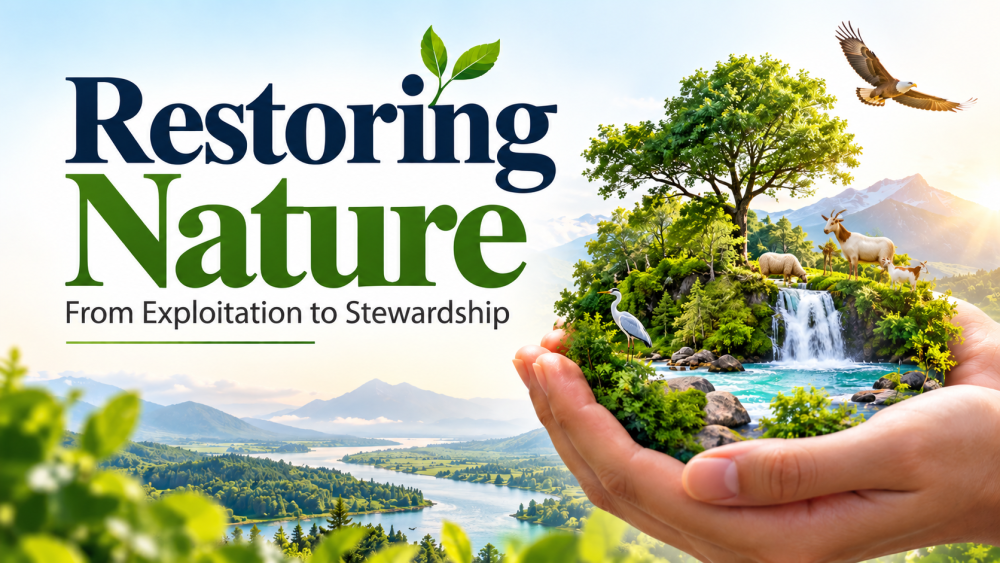
43/2026
For centuries, humanity has treated nature as a vast storehouse of resources: land to cultivate, forests to harvest, rivers to divert, minerals to extract, and oceans to exploit. This relationship has brought remarkable economic and technological progress, but it has also created a profound ecological imbalance. Forests have disappeared, rivers have been polluted, soils have degraded, species have been driven toward extinction, and the climate has destabilized.
Today, a powerful idea is gaining traction: nature should not be regarded merely as property or a resource for human use. It has value, and societies may need to recognize nature's rights as part of a new environmental ethic.
Nature Is More Than a Resource
A river is more than a channel for irrigation or a potential source of electricity. A forest is more than timber waiting to be harvested. A wetland is more than wasteland awaiting development. Each is a living ecological system that supports countless forms of life and performs functions on which human civilization ultimately depends.
Forests regulate rainfall, sequester carbon, and protect biodiversity. Wetlands filter water and reduce flood risk. Healthy soils sustain agriculture. Oceans regulate climate and provide food and livelihoods. Pollinators sustain food production.
When these systems are damaged, the consequences eventually return to society.
Recognizing the rights of nature therefore challenges a deeply held assumption: that human interests automatically take precedence over those of the rest of the living world.
From Conservation to Restoration
Traditional conservation has often focused on protecting what remains. That remains essential, but it is no longer sufficient.
The scale of ecological degradation demands restoration.
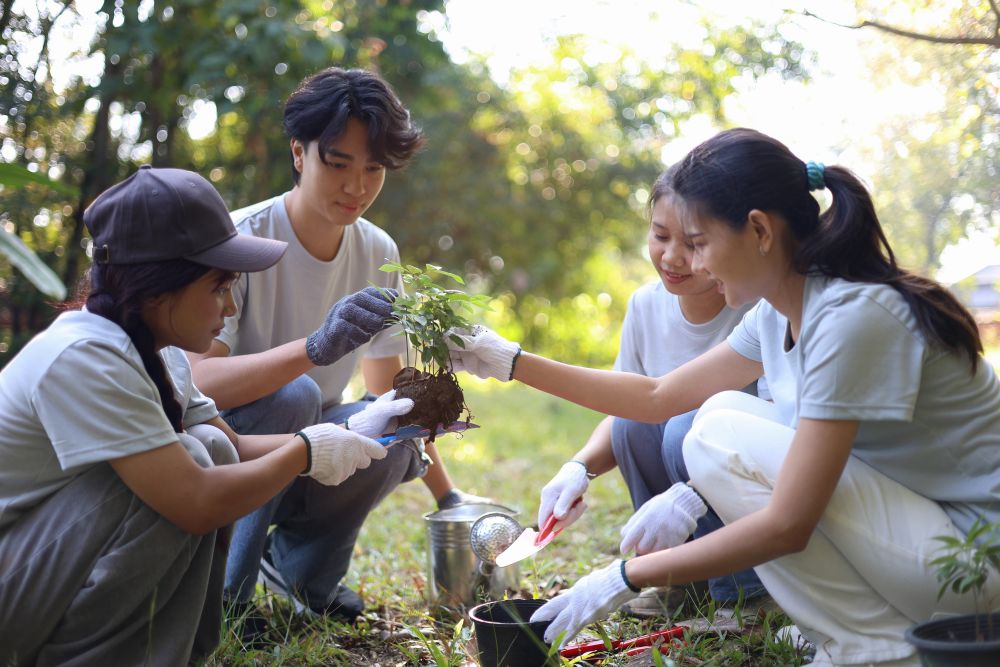
Restoration means bringing degraded ecosystems back toward ecological health. It can involve regenerating forests, reviving wetlands, restoring river systems, rebuilding soils, protecting mangroves, recovering grasslands, and creating conditions in which threatened species can return.
But restoration should not simply mean planting trees or creating attractive green spaces. True ecological restoration requires understanding how ecosystems function and allowing natural processes to recover.
Sometimes the most effective intervention is to remove the pressure that caused the degradation in the first place and allow nature to heal itself.
Giving Nature a Voice
If nature has rights, an important question arises: Who speaks for nature?
Nature cannot appear in court, attend a planning meeting, or sign a development agreement. Human institutions must therefore provide mechanisms for representing ecological interests.
This idea is already influencing environmental law and governance in various parts of the world. Some jurisdictions have granted legal rights or standing to rivers, ecosystems, or other elements of nature. These approaches seek to ensure that ecological consequences are treated not merely as externalities but as legitimate interests in decision-making.
The significance of this approach extends beyond the courtroom. It asks governments, businesses, universities, and communities to reconsider a fundamental question before undertaking development:
What does this decision mean not only for people today, but also for the living systems that sustain people tomorrow?
The Economics of Restoration
Restoring nature is sometimes portrayed as an obstacle to economic development. Ecological restoration can be an investment in economic security. Degraded land reduces agricultural productivity. Polluted water raises treatment costs and threatens public health. Deforestation intensifies erosion and flooding. Destroying coastal ecosystems leaves communities more vulnerable to storms. The loss of biodiversity can undermine agriculture, fisheries, and tourism.
Restoration can reverse some of these losses.
Healthy ecosystems provide services that would otherwise require enormous financial investment. A functioning wetland can reduce flooding. A healthy forest can protect watersheds. Mangroves can buffer coastal communities. Healthy soils can reduce dependence on costly agricultural inputs.
The question, therefore, should not simply be "How much will restoration cost?"
It should also be:
“How much will the continued destruction of nature cost?”
Universities Must Become Laboratories of Restoration
Universities have a special responsibility in this transformation because they shape both knowledge and the next generation of decision makers. Environmental education should move beyond lectures on pollution, climate change, and biodiversity. Students should experience restoration as a practical, interdisciplinary challenge.
Biologists can study biodiversity. Environmental scientists can monitor ecosystems. Engineers can design sustainable technologies. Computer scientists can use artificial intelligence and remote sensing to map ecological change. Economists can quantify the value of ecosystem services. Lawyers can explore emerging concepts of environmental rights. Architects and planners can design nature-positive cities.
In this sense, restoring nature is not a discipline; it is a multidisciplinary mission.
Universities can establish living laboratories where students and researchers restore degraded landscapes, monitor biodiversity, conserve water, improve soil health, and document ecological recovery. These initiatives can transform campuses from consumers of natural resources into models of sustainable development.
The Global South Has a Vital Role
The restoration movement must also recognize the realities of developing countries. For communities facing poverty, food insecurity, and unemployment, environmental protection cannot be framed merely as a restriction on development. People need livelihoods, energy, housing, food, and economic opportunity.
The challenge is to build a model in which human prosperity and ecological recovery reinforce each other.
Nature-based enterprises, sustainable agriculture, ecotourism, renewable energy, green skills, and circular economies can create jobs while reducing ecological pressure. Restoration itself can become a source of skills, research, entrepreneurship, and local employment.
A New Social Contract with Nature
Perhaps the deepest message of the rights-of-nature movement is philosophical.
Humanity does not exist outside nature.
We are biological organisms dependent on air, water, soil, biodiversity, and stable ecological systems. The boundary we have created between "human society" and "nature" is largely artificial.
Recognizing the rights of nature does not mean denying human needs. Rather, it means recognizing that human rights and nature's health are ultimately interconnected.
Clean air, safe water, fertile soil, a stable climate, and biodiversity are foundations of human well-being. Protecting nature is therefore not a luxury reserved for prosperous societies. It is fundamental to a secure and dignified future.
From Taking to Giving Back
For much of modern history, humanity has asked nature one question:
What can we take from it?
The restoration era requires a different question:
What can we give back?
We can restore forests rather than merely planting trees. We can revive rivers rather than simply extracting their water. We can rebuild soils rather than continuously depleting them. We can protect biodiversity rather than waiting for species to disappear. And we can design cities in which nature is an integral part of urban life rather than an afterthought.
Restoring nature ultimately requires more than new laws, technologies, or international agreements. It requires a change in consciousness.
Nature is not simply the scenery surrounding civilization.
Nature is the living foundation upon which civilization stands.
If the twenty-first century is to become an age of ecological renewal, humanity must shift from domination to stewardship, from extraction to regeneration, and from treating nature as property to recognizing our responsibilities to the living world.
The future of nature will shape the future of humanity.
Restoring nature may be one of the most consequential responsibilities our generation leaves to the next.