Youth and Environment - Lecture 15
Posted 7 months ago
03/2026
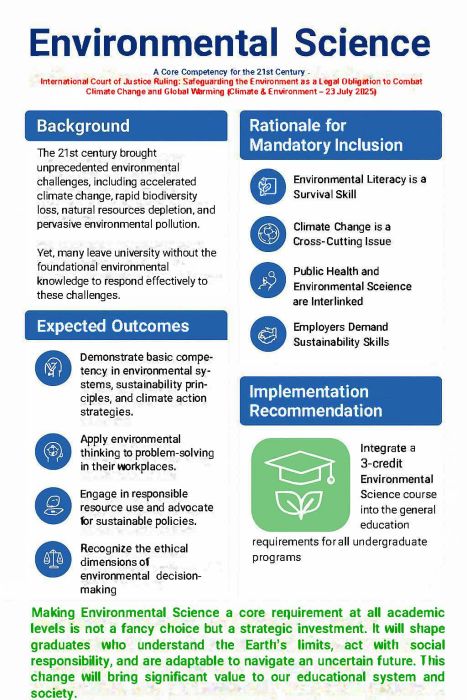
Environmental issues are growing, including climate change, deforestation, pollution, and water shortages. These problems directly impact human health, ecosystems, and economic stability. As a result, protecting the environment is a shared responsibility among individuals, communities, institutions, and especially youth, to inspire a sense of empowerment and active participation.
Youth and the Environment: The Pakistani Perspective
In Pakistan, young people constitute a significant portion of the population. This demographic fact places a special responsibility on them to safeguard the environment. Unlike older generations, youth will face the long-term consequences of today’s environmental decisions. The quality of the air they breathe, the water they drink, and the food they consume depends on how wisely natural resources are managed now.
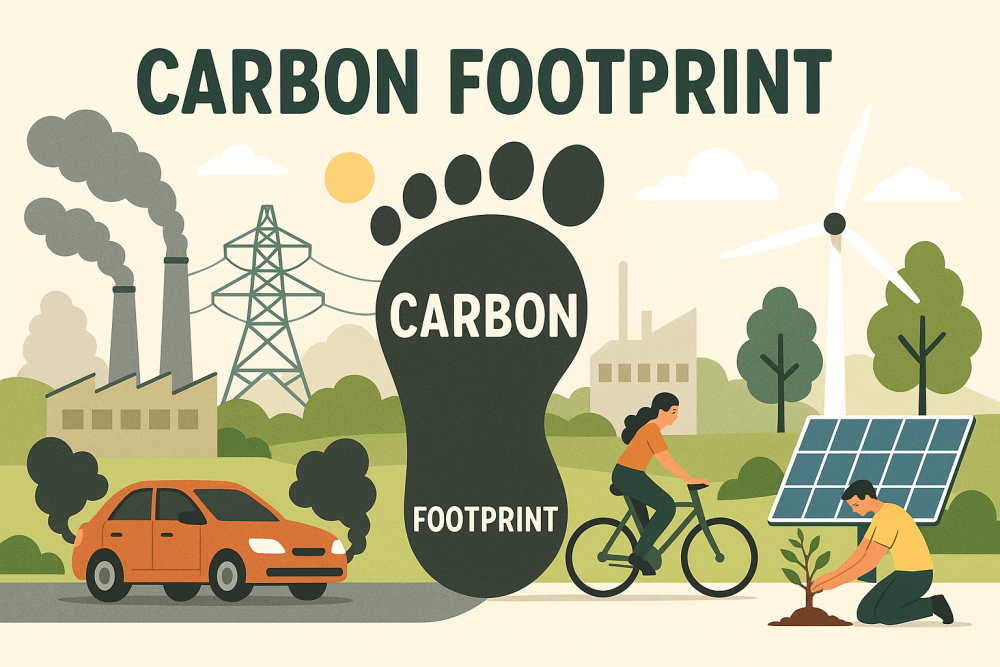
Youth decisions, whether related to consumption, transportation, energy use, or waste disposal, will directly shape future environments. Environmental Science, therefore, begins not only with scientific knowledge but also with personal accountability.
Knowledge Brings Responsibility
Environmental knowledge encourages responsibility. Each person depends on nature for survival. For example, we breathe oxygen every day, mostly produced by plants, yet we rarely consider our duty to protect or restore green spaces. Environmental Science inspires this reflection: since we gain benefits from nature daily, what actions are we committed to giving back? This understanding builds confidence to act responsibly.
This sense of responsibility can start on a very personal level at home, in schools, and within local communities by adopting eco-friendly lifestyles and supporting greening initiatives.
Greening Everyday Life
Environmental protection doesn't always need big projects. Small actions can add up to make a big difference, fostering hope and a feeling that everyone can contribute meaningfully.
- Greening homes and campuses
- Reducing waste and avoiding unnecessary consumption
- Choosing eco-friendly products
- Respecting and following environmental laws
These actions lay the foundation for sustainable living, where daily choices promote long-term environmental health.
Environmental awareness is promoted worldwide through World Environment Day, observed annually on June 5th under the leadership of the United Nations Environment Program since 1974. Each year, a specific environmental theme relevant to both global and local issues is highlighted.
Recent themes emphasize:
- Plastic pollution and the growing threat of microplastics
- Land restoration, combating desertification, and improving drought resilience
These themes are very important to Pakistan, where plastic waste, land degradation, and water shortages are increasing problems.
Ecosystem Balance and Sustainable Consumption
Ecosystems consist of plants, animals, and microorganisms that sustain a delicate balance. The loss of species disrupts this equilibrium and threatens environmental stability. Sustainable consumption helps protect ecosystems by ensuring that resource use does not exceed nature’s ability to replenish them.
Sustainable consumption means:
- Buying only what is necessary
- Preferring environmentally friendly products
- Reducing waste
- Supporting policies and regulations that protect nature
Understanding Sustainable Development
There isn't a single definition of sustainable development, but its main idea is simple: what we do today must be sustainable over the long term. Recognizing this helps students feel purposeful and responsible for shaping a better future.
Sustainable development promotes positive change, improving environmental conditions while supporting social well-being and economic growth. It does not mean stopping development; rather, it means guiding change responsibly.
Human Impact and the Need for Action
Human activity has become the dominant force shaping Earth’s systems. Major environmental challenges include:
- Deforestation and biodiversity loss
- Climate change and melting ice
- Water scarcity and pollution
Sustainable environmental development asks two key questions:
- What problems do we face today?
- What solutions can improve life for both present and future generations?
The answers lie in a combination of technology, social change, and wise resource use.
Three Dimensions of Sustainable Development
Sustainable development rests on three interconnected dimensions:
- Environmental sustainability – utilizing resources without depleting them
- Economic sustainability – generating value without enhancing inequality or harming the environment
- Social sustainability – ensuring human rights, equity, education, health, and inclusion
Failure in any one dimension can make development unsustainable in the long run.
Environmental Management Systems and ISO 14001
ISO 14001–based Environmental Management Systems (EMS) are widely applicable, suitable wherever an organization’s activities, products, or services impact the environment. The standard is intentionally sector-neutral and scalable, making it effective for both small labs and large projects.
What is ISO 14001?
ISO 14001 is an international standard that helps organizations systematically identify, control, and reduce environmental impacts, comply with laws, and continually improve environmental performance.
Environmental Management Systems (EMS) convert sustainability goals into practical action by:
- Identifying environmental impacts
- Setting objectives and controls
- Ensuring legal compliance
- Promoting continuous improvement
ISO 14001 offers an internationally recognized framework for EMS, providing credibility, adaptability to local needs, and alignment with governance and accountability. For Pakistan, ISO 14001 helps organizations comply with environmental laws, enhance resource efficiency, and remain competitive in global markets.
Key Message of the Lecture
- Environmental Science explains the problem.
- Sustainability defines the goal.
- EMS provides the method.
- ISO 14001 offers the global roadmap, adaptable to local needs.
Question 1
Discuss the role of youth in environmental protection, with a special focus on Pakistan.
Tentative Answer:
Youth play a crucial role in environmental protection, especially in Pakistan, where they make up most of the population. As future leaders, professionals, and decision-makers, young people will live longer with the impacts of today’s environmental issues, including pollution, climate change, and resource shortages. Their everyday choices about consumption, transportation, energy use, and waste management directly affect environmental quality.
In Pakistan, environmental issues such as air pollution, water shortages, plastic waste, and deforestation require active youth involvement. Educated young people can raise awareness, adopt sustainable habits, and influence community behavior. Through environmental education, volunteering, and responsible citizenship, youth can serve as agents of change, helping to ensure long-term environmental sustainability for future generations.
Question 2
Define sustainable development and discuss its importance in today's world.
Tentative Answer:
Sustainable development refers to a pattern of growth that meets present needs without compromising the ability of future generations to meet their own needs by keeping resources available for them. It emphasizes long-term planning, responsible resource management, and balanced progress. Understanding these benefits helps students see how sustainable development ensures a healthier planet and equitable societies for generations to come, reinforcing its importance in today's world.
There is no single fixed definition of sustainable development because it applies to different environmental, social, and economic situations. Its importance lies in solving global issues such as climate change, resource depletion, and social inequality. Sustainable development encourages positive change by guiding economic and social progress that protects ecosystems, supports human well-being, and sustains Earth's life-support systems.
Question 3
Human activities are now considered the primary factor influencing Earth’s environment. Elaborate on this statement.
Tentative Answer:
Human activities have become the main force shaping Earth’s environment due to rapid population growth, industrialization, urbanization, and excessive resource consumption. Deforestation for agriculture and development has caused biodiversity loss and ecosystem disruption. Industrial emissions and burning fossil fuels have accelerated climate change, resulting in rising temperatures, melting ice, and extreme weather events.
Additionally, water scarcity and pollution from untreated waste, agricultural runoff, and excessive freshwater use threaten human health and ecosystems. These issues show that human actions now impact natural systems more heavily than natural geological forces, making sustainable management crucial.
Question 4
Describe the idea of sustainable consumption and why it matters for keeping ecosystems balanced.
Tentative Answer:
Sustainable consumption involves using goods and services in ways that reduce environmental damage while fulfilling basic human needs. It includes purchasing only what is necessary, choosing eco-friendly products, minimizing waste, and conserving resources.
This approach is important for maintaining ecosystem balance because overconsumption leads to resource depletion, pollution, and habitat destruction. By adopting sustainable consumption habits, individuals help reduce pressure on ecosystems, protect biodiversity, and ensure that natural systems can regenerate and continue supporting life in the long term.
Question 5
Describe ecosystem structure and explain the effects of species loss.
Tentative Answer:
An ecosystem consists of living organisms such as plants, animals, and microorganisms interacting with their physical environment. Each component plays a specific role in maintaining ecological balance. Plants produce food and oxygen, animals regulate population dynamics, and microorganisms decompose organic matter and recycle nutrients.
Loss of species disrupts these interactions, weakening ecosystem stability. Biodiversity loss can disrupt food chains, reduce resilience to environmental change, and ultimately lead to ecosystem collapse. Therefore, protecting biodiversity is essential for environmental sustainability.
Question 6
Discuss the concept of sustainable environmental development.
Tentative Answer:
Sustainable environmental development aims to enhance environmental conditions while fostering economic and social progress. It does not seek to halt development but to direct it responsibly, ensuring that natural resources are not depleted or permanently harmed.
This approach recognizes that development must continue to improve living standards, but it should be planned in ways that preserve ecosystems, reduce pollution, and promote long-term environmental health. Sustainable development ensures that progress today does not cause environmental crises tomorrow.
Question 7
Explain the three pillars of sustainable development.
Tentative Answer:
Sustainable development is based on three interconnected dimensions: environmental, economic, and social sustainability. Environmental sustainability involves using natural resources within ecological limits and avoiding irreversible damage. Economic sustainability focuses on creating long-term value without increasing inequality or environmental costs. Social sustainability emphasizes human rights, education, health, equity, and social stability.
These dimensions rely on each other. Failure in one can weaken the others, making long-term development difficult. Proper balance among all three is key to lasting progress.
Question 8
Discuss the objectives and significance of World Environment Day.
Tentative Answer:
World Environment Day is observed annually on June 5th to raise awareness about environmental issues and promote global action. The United Nations Environment Program organizes it and has been observing it since 1974.
Each year highlights a specific theme, such as plastic pollution or land restoration, emphasizing urgent environmental issues. World Environment Day is important because it motivates governments, organizations, and individuals to take responsibility for protecting the environment both locally and worldwide.
Question 9
Define an Environmental Management System (EMS) and describe its function.
Tentative Answer:
An Environmental Management System (EMS) is a structured framework that helps organizations identify, manage, and reduce their environmental impacts. It involves establishing environmental objectives, complying with legal requirements, monitoring performance, and promoting continuous improvement.
EMS promotes sustainable organizational practices by incorporating environmental factors into decision-making. It helps organizations reduce pollution, conserve resources, and improve environmental accountability.
Question 10
Explain the significance of ISO 14001 and its importance for Pakistan.
Tentative Answer:
ISO 14001 is a globally recognized standard that offers a structured framework for developing an effective Environmental Management System. It helps organizations systematically manage their environmental responsibilities, ensure regulatory compliance, and continually enhance their environmental performance.
For Pakistan, ISO 14001 is especially important because it helps meet changing environmental laws, boosts resource efficiency, and increases export competitiveness, as many international buyers look for environmental certification. It also improves institutional governance and environmental credibility.
Question 11
“Knowledge brings responsibility.” Discuss this statement in the context of Environmental Science.
Tentative Answer:
In Environmental Science, understanding environmental issues fosters a sense of responsibility to act. Awareness of pollution, climate change, and ecosystem degradation makes individuals accountable for their actions and lifestyle choices.
Environmental knowledge promotes responsible actions like conserving resources, reducing waste, and supporting environmental protection efforts. Therefore, understanding environmental issues fosters personal and collective responsibility for protecting natural systems.
Question 12
Critically analyze the statement connecting Environmental Science, sustainability, EMS, and ISO 14001.
Tentative Answer:
Environmental Science helps identify and explain environmental problems by studying natural systems and their interactions with human activities. Sustainability defines the long-term goals of protecting ecosystems while supporting development. Environmental Management Systems provide practical methods for implementing sustainability at organizational levels.
ISO 14001 provides a globally recognized framework that standardizes these efforts and ensures accountability. Together, these elements form a comprehensive approach to environmental protection, connecting knowledge, goals, actions, and governance.