When Weather Becomes Biology: The Rising Science of Biometeorology
Posted 1 month ago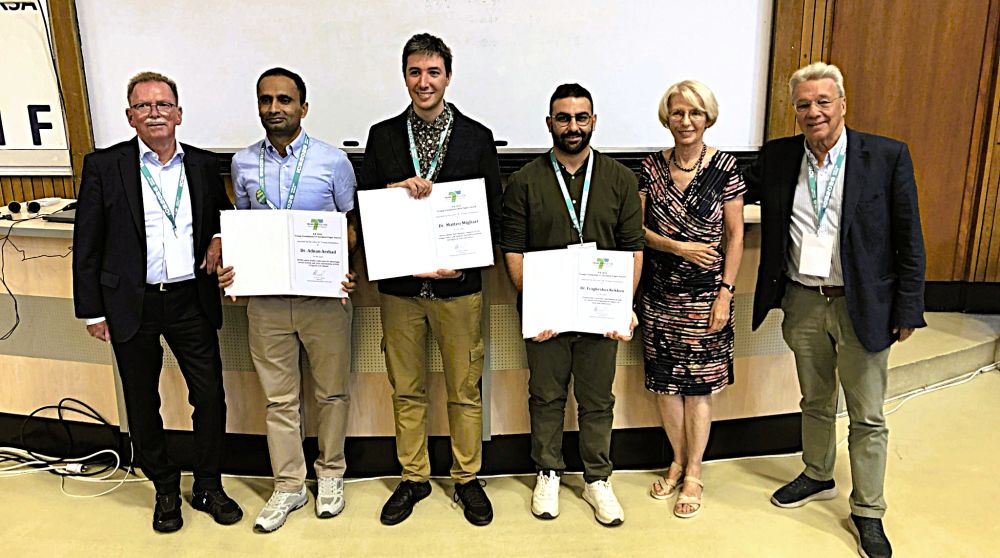
35/2026
In the current era of global warming, understanding biometeorology, an interdisciplinary science at the intersection of meteorology, biology, ecology, agriculture, environmental science, and human health, is important.
Biometeorologists study how atmospheric conditions, including temperature, humidity, solar radiation, wind, air pressure, and extreme weather, interact with humans, animals, plants, and ecosystems. In an era of accelerating climate change, their work has taken on an urgency that extends far beyond academic laboratories.
Biometeorology was celebrated this week at the International Congress of Biometeorology (ICB2026) in Novi Sad, where three scientists received prestigious awards for outstanding research. Sponsored by the Solco W. Tromp Foundation, the awards recognize innovative scientific work that addresses some of the most consequential relationships among climate, agriculture and human health.
The awards also carry a remarkable scientific legacy. Seventy years ago, Dr. Solco W. Tromp was among the co-founders of the International Society of Biometeorology and played a key role in establishing the International Journal of Biometeorology. The foundation established from his assets continues to support the advancement of this increasingly important field.
From city streets to cotton fields - and human health
The breadth of the three award-winning studies demonstrates precisely why biometeorology matters.
The First Prize was awarded to Dr. Matteo Migliari for his research, “Street albedo distribution’s impacts on air temperature and outdoor thermal sensation during heat and cold waves.” His work examines a deceptively simple feature of cities, the reflectivity of their surfaces. It shows how the physical characteristics of streets can influence both air temperature and people’s thermal experience.
This is biometeorology in action: transforming an atmospheric measurement into an understanding of human experience.
The Second Prize went to Dr. Adnan Arshad for his study titled “APSIM-cotton model calibration for phenology-driven sowing and yield optimization in drip irrigated arid climate.”
His research highlights another critical dimension of biometeorology: the intimate relationship among weather, crops and food security. In arid environments, the timing of sowing, crop development and irrigation can determine whether agricultural systems remain productive amid increasingly variable climatic conditions.
By integrating crop modeling, climate information and agricultural management, this study points toward a future in which farmers can make more precise decisions in response to changing environmental conditions.
The Third Prize was awarded to Dr. Fragkeskos Kekkou for “Temperature extremes and human health in Cyprus: Investigating the impact of heat and cold waves.”
The study addresses one of the most urgent questions facing societies as the climate changes: what happens to human health when temperatures move beyond the range in which our bodies can comfortably function?
Heat and cold are not merely uncomfortable. Extreme temperatures can increase physiological stress and contribute to serious health consequences, particularly among vulnerable populations.
Together, the three studies form a compelling scientific continuum from the surfaces beneath our feet to the crops that feed us to the human bodies that experience the atmosphere around us.
Science for a changing planet
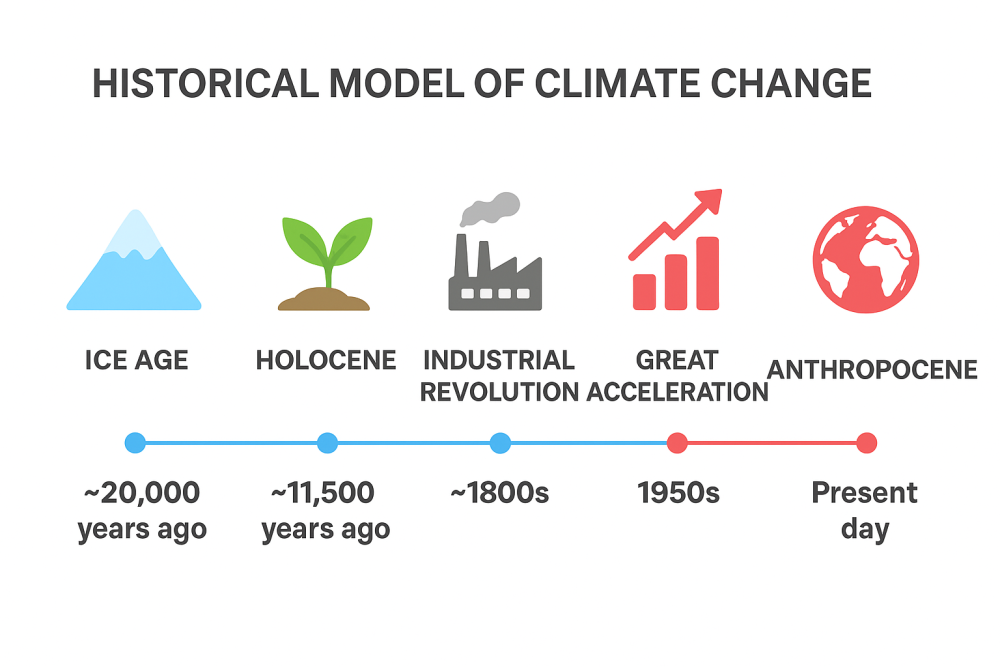
Biometeorology is becoming increasingly important as climate change alters the environmental conditions under which life has evolved.
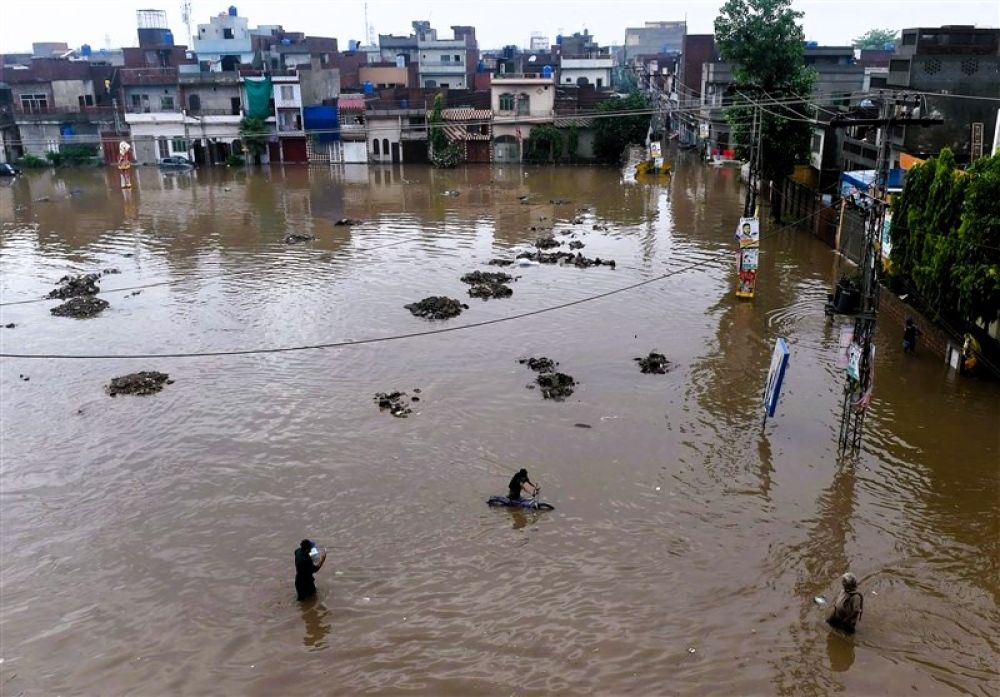
Heatwaves are becoming more consequential. Extreme precipitation is disrupting ecosystems and agriculture. Urbanization is altering local climates. Shifting temperatures are affecting plant growth, animal behavior, and disease transmission. At the same time, societies are seeking ways to design cities, agricultural systems, and public health policies that are more resilient.
A meteorologist may provide atmospheric data. A biologist may explain the physiological response. An agricultural scientist may translate climate variability into crop productivity. A physician may investigate the health consequences. A data scientist may build predictive models that connect all these dimensions.
Biometeorology provides an intellectual bridge - A well-deserved congratulations.
Prof. Dr. Muhammad Mukhtar, Rector of the University of Southern Punjab, Multan, extended congratulations to Dr. Adnan Arshad, Dr. Matteo Migliari, and Dr. Fragkeskos Kekkou on this distinguished recognition of their scientific contributions.
Dr. Adnan Arshad's achievement is especially commendable. His Second Prize at an international congress devoted to biometeorology is not only a personal scientific accomplishment but also a meaningful contribution to the global conversation about climate-resilient agriculture and sustainable food production.
Prof. Dr. Muhammad Mukhtar extends his heartfelt appreciation to all the awardees for demonstrating that rigorous scientific inquiry can address real-world challenges facing humanity. He also thanks the Solco W. Tromp Foundation, the International Society of Biometeorology, and the organizers of ICB2026 for creating a platform where scientific excellence, international collaboration, and the legacy of one of biometeorology's pioneers continue to converge.
The recognition of these researchers is more than an awards ceremony. It is a reminder that some of the most important scientific questions of the 21st century arise precisely where disciplines meet.
We must understand how the atmosphere interacts with life. That is the promise of biometeorology, and increasingly, it may become one of the sciences essential to humanity's ability to adapt to a changing planet.