How a Student-Built Robotic Fish Is Cleaning Microplastics from Our Waterways?
Posted 6 months ago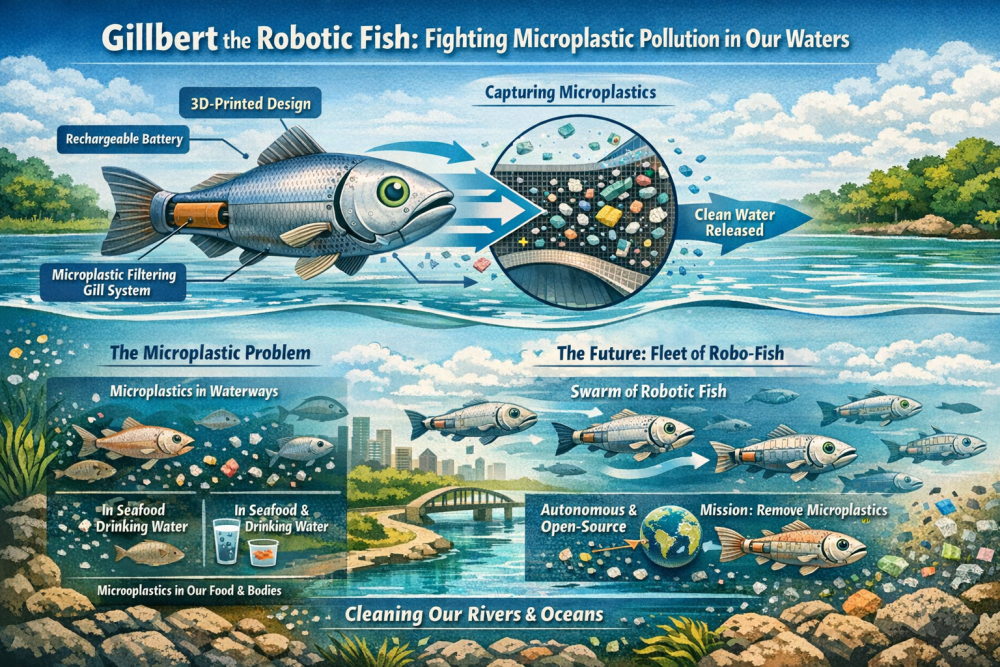
12/2025
Eleanor Mackintosh, a student at the University of Surrey in the United Kingdom, has developed a robotic fish named Gillbert that moves through water with the smoothness of a real marine creature but with a much more urgent mission.
During swimming, Gillbert draws polluted water through a precisely engineered mesh “gill” system, capturing microplastic fragments as small as 2 millimeters before releasing cleaner water back into the environment. Its open-source design is crucial because it allows others to replicate and adapt the technology, amplifying its potential environmental impact. It acquires power from a rechargeable battery housed in its tail; its brilliance lies not in science fiction but in intelligent, practical engineering. What makes this project truly transformative is its open-source design. This isn’t just one robotic fish; it’s a replicable blueprint for many. In an age when most technological investments prioritize speed and profit, Gillbert stands for something different: intelligent, potentially autonomous systems designed to repair environmental damage on a scale. It’s easy to imagine fleets of such robotic “agents” navigating river currents, mapping pollution patterns, and removing microplastics before they enter the food chain. And that urgency is real. Microplastics are no longer just a distant ocean problem; they are in our drinking water, in our seafood, and even inside the human body. The crisis isn’t in the future; it’s already here.
From Classroom Idea to Real-World Prototype
At the heart of this innovation is a student from the University of Surrey, Eleanor Mackintosh, whose bio-inspired robotics design captured imaginations and won the Natural Robotics Contest. This public engineering competition invites creative ideas for machines to help the environment.
Mackintosh’s winning idea became a reality with a salmon-sized robot affectionately called “Gillbert.” Made using a consumer 3D printer and designed to imitate real fish movement, Gillbert glides through lakes, rivers, and coastal waters, collecting microplastic pollution as it moves.
How a Robotic Fish Filters Plastic Pollution
Gillbert isn’t just a toy or classroom project. Built with a fine mesh “gill” system inside its head, the robot pulls water in as it swims, just like a real fish breathing. Microplastic particles, often too small to see with the naked eye but large enough to carry toxic chemicals, get trapped in these filters while clean water flows back out.
While the earliest prototypes are remote-controlled and gather plastics for research, engineers already envision future versions that swim autonomously, explore farther, and filter even smaller particles with greater efficiency.
Even more impressively, one recent design iteration included a microbial fuel cell system that digests the captured plastic and converts it into energy, suggesting the robot could someday power itself using the pollution it consumes.
Why This Matters: Water Pollution in Plain Sight
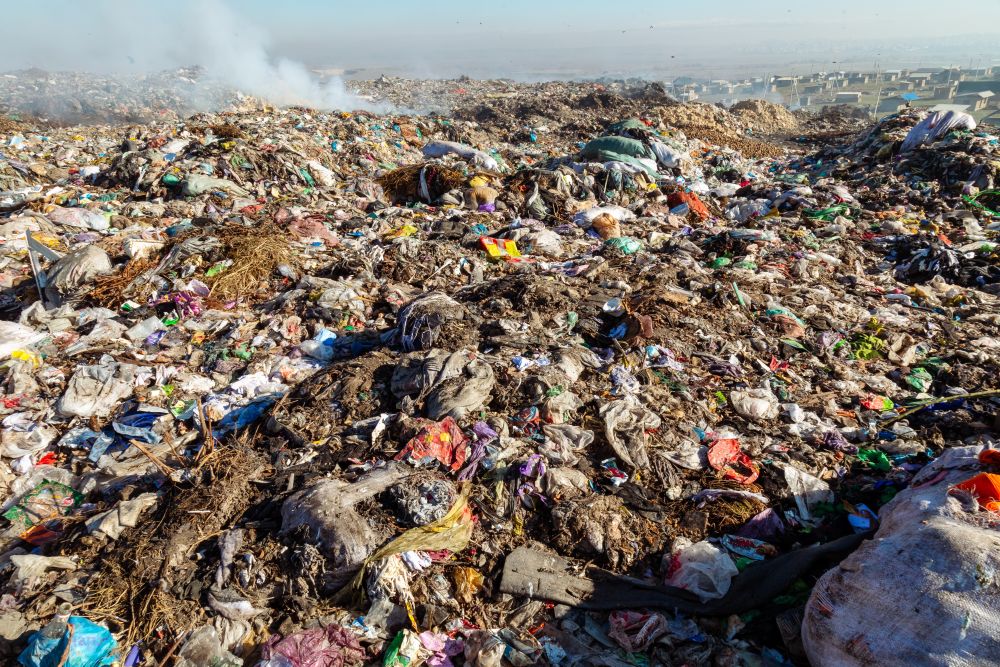
Microplastic pollution isn't a distant issue. It’s present everywhere in our rivers, lakes, estuaries, and oceans. Studies indicate that once tiny plastic fragments enter water systems, they don’t biodegrade; instead, they break down into smaller pieces that collect toxins. These particles are now found in fish, shellfish, and even drinking water for humans. Recognizing this widespread presence can help the audience feel connected to the problem and motivated to support innovative solutions like Gillbert.
Traditional cleanup efforts have struggled with the vast scale and invisibility of this pollution. Booms and nets can catch large plastic debris, like bags and bottles, but are mostly ineffective against microplastics the size of grains of sand. Meanwhile, microplastics act like sponges, absorbing harmful chemicals and transporting them up the food chain.
Experts say that new ideas are urgently needed. “We don’t know where the vast majority of plastic dumped into our waterways ends up,” one robotics researcher behind the project said, highlighting how little we truly understand about the lifecycle of plastic pollution in freshwater systems.
Innovation at the Crossroads of Technology and Nature
Gillbert’s design is a striking example of biomimicry, where technology draws inspiration from nature. By moving like a fish and filtering like gills, the robot demonstrates how engineering and biology can come together to tackle environmental problems that have developed over decades.
The Bigger Picture: Can Robots Help Restore Natural Systems?
Gillbert alone won’t solve the world’s plastic crisis. But it marks an important shift in how we approach fighting pollution. Instead of just lamenting environmental damage, innovators are developing tools that can operate at the scale and speed needed to make a real difference.
Professor Emeritus Dr. Muhammad Mukhtar, who teaches Introduction to Environmental Science at the University of Southern Punjab in Multan, often reminds his students that innovation should serve humanity, not just impress it. Reflecting on inventions like the robotic fish designed to remove microplastics, he notes that such futuristic, science-driven solutions offer more than symbolic hope — they represent a new path in environmental stewardship. If intelligent systems can be built to clean polluted waterways, he argues, similar technologies could be adapted to address other urgent threats, including particulate matter (PM2.5) and airborne pollutants that silently harm lungs, crops, and climate systems across our cities. For Dr. Mukhtar, the lesson is clear: the same creativity that drives industrial growth must now be used to repair ecological damage. The future of environmental protection will rely not only on regulation and awareness, but on bold, interdisciplinary innovations capable of restoring balance to the air we breathe and the water we depend on.