USP Rector participated in the UNESCO Dialogue Exploring Academic Freedom and Universities’ Role in Addressing the Climate Crisis
Posted 13 hours ago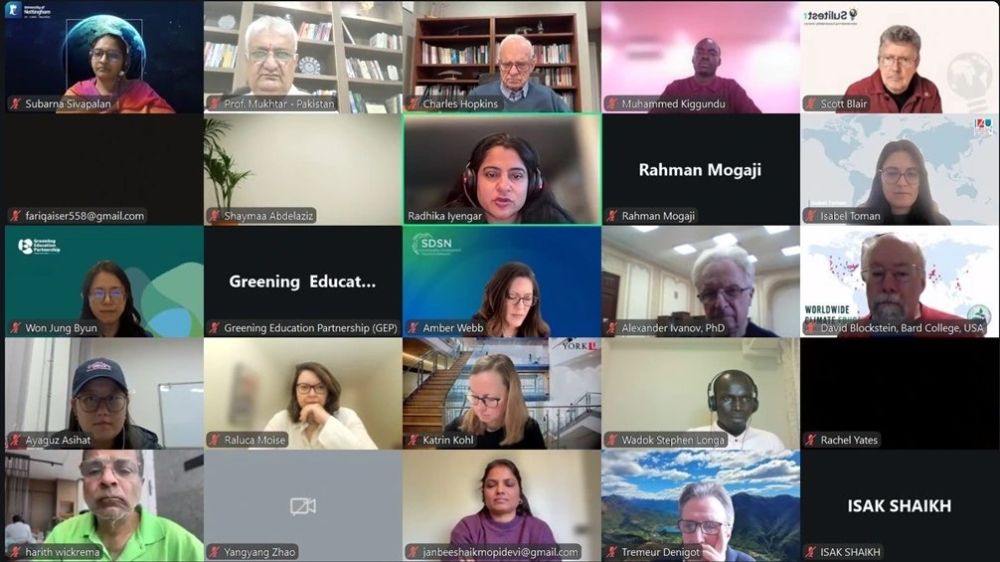
49/2026
The first event of the Greening Education Partnership (GEP) Higher Education Thematic Working Group Dialogue Series, Universities in the Climate Crisis – Balancing Institutional Action and Scholarly Independence, convened higher education stakeholders from around the world to explore the future role of universities in advancing climate education, climate action, and sustainable development beyond 2030.
The dialogue provided a global platform for knowledge sharing, reflection, and discussion of the challenges and opportunities facing higher education institutions as they respond to the climate crisis while safeguarding their core academic mission. The discussions focused on four interconnected themes: academic freedom and the conditions necessary to generate credible knowledge; sustainability across teaching, research, campus operations, and institutional culture; student movements and youth participation in promoting institutional accountability; and intersectionality in climate action, including inclusion, representation, and diverse knowledge systems.
Insights and recommendations emerging from the dialogue will inform a working paper and policy briefs that will help guide the priorities of the GEP Higher Education Thematic Working Group through 2030 and beyond.
Launched in December 2022 by UNESCO and its partners, the Greening Education Partnership (GEP) aims to prepare learners worldwide to understand and respond to climate change. Its work focuses on transforming educational institutions, integrating sustainability into curricula, strengthening teacher training, and building the capacity of education systems and communities to address environmental challenges.
A central message of the dialogue was that academic freedom is essential to credible research, informed decision-making, and effective climate action. Participants discussed how limited research funding, political pressures, and restrictions on scholarly inquiry can limit universities’ ability to investigate environmental problems, challenge established assumptions, and contribute independently to public policy.
The discussion also highlighted the importance of recognizing both scientific research and local knowledge. Experiences shared from Uganda illustrated how farming communities use traditional observations and practical experience to understand changing weather patterns. Participants emphasized that combining scientific evidence with community knowledge can help develop more effective and locally relevant responses to climate change.
Another important theme was the need to make sustainability an integral part of university life, rather than confining it to environmental science departments. Universities can strengthen their contributions by integrating sustainability across teaching, research, campus management, institutional policies, and community engagement. Participants identified collaboration among natural scientists, social scientists, economists, policymakers, and local communities as vital to addressing the climate crisis's interconnected environmental, social, and economic dimensions.
Participants further emphasized the importance of respectful dialogue, critical thinking, and meaningful youth participation in shaping institutional priorities and accountability. Universities must provide spaces where students and scholars can examine complex issues, discuss diverse perspectives, and contribute to solutions without compromising academic independence.
The dialogue also looked ahead to the global education agenda beyond 2030, emphasizing the need for higher education institutions worldwide to share their experiences and recommendations to inform future sustainability policies.
Prof. Emeritus Dr. Muhammad Mukhtar, Rector of the University of Southern Punjab (USP), Multan, Pakistan, and Editor-in-Chief of GreeningDotLive, who teaches Introduction to Environmental Science, appreciated UNESCO’s initiative to bring the international higher education community together to address the relationship between academic freedom and sustainability.
He emphasized the importance of strengthening environmental education, equipping students with critical-thinking skills and encouraging them to translate classroom learning into practical action. He also highlighted the value of public awareness, independent research, and community engagement in building a culture of environmental responsibility.
Through his academic work in environmental science and editorial leadership at GreeningDotLive, Prof. Mukhtar helps communicate environmental challenges in accessible language and encourages informed public participation in sustainability initiatives.